The Gauntlet
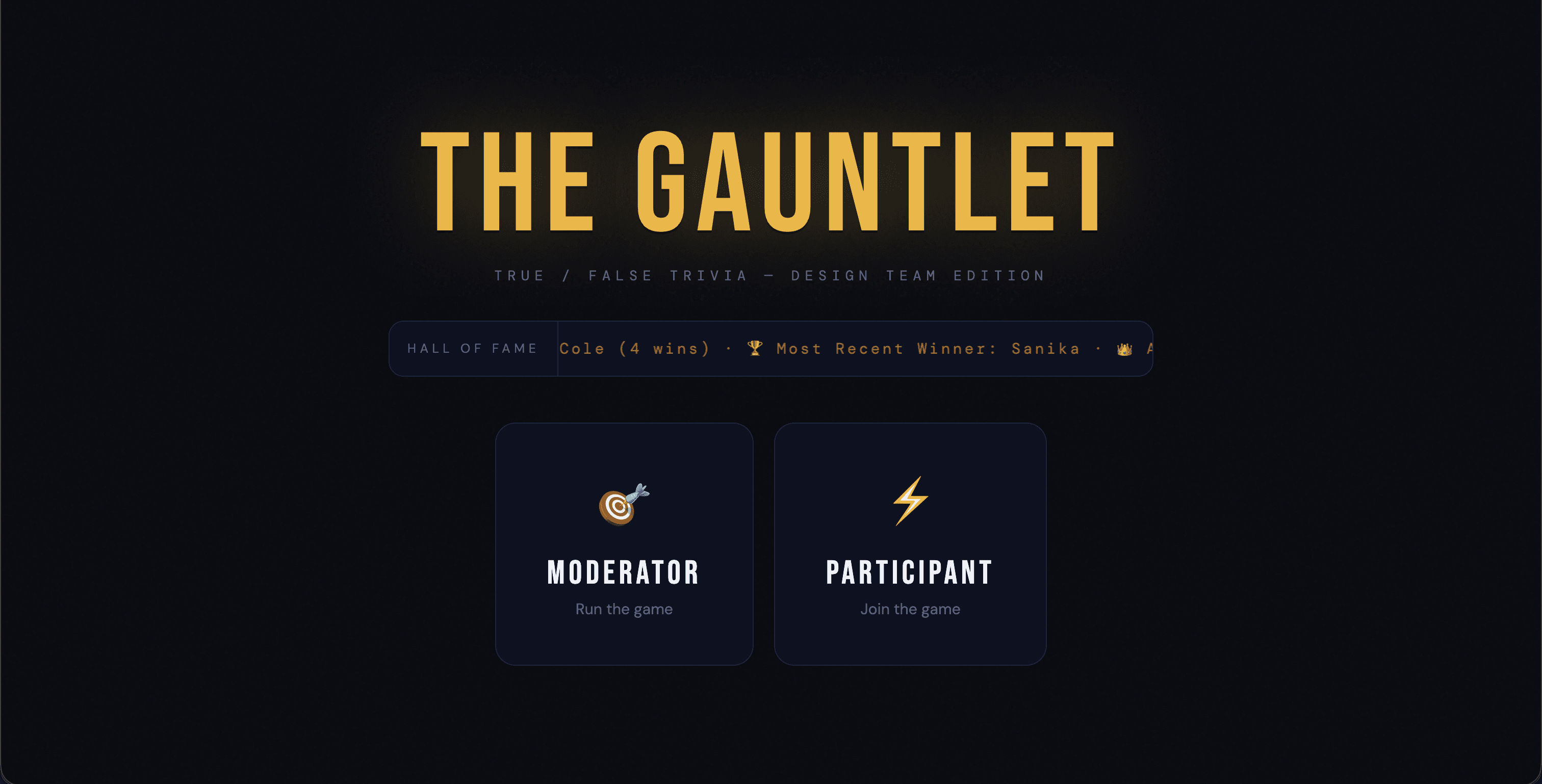
Our Friday trivia had one problem. Everyone could see the answers. So I built something better.
- Role
- Designer and builder
- Built with
- Claude Code
- Stack
- Single HTML file, Firebase, Vercel
- Audience
- Internal design team
1 sprint
from idea to launch
Weekly
played on Fridays
0
frontend frameworks or build tools
01The problem
We played trivia on a shared FigJam board. The problem was that everyone could see each other's answers.
- That made it hard to keep the competition fair or suspenseful.
- We wanted the game to be easy to join from a phone.
- I didn't want to turn a simple team activity into an overly complicated app.
02What I did
How I solved it
- 1
Fixed the reveal mechanic
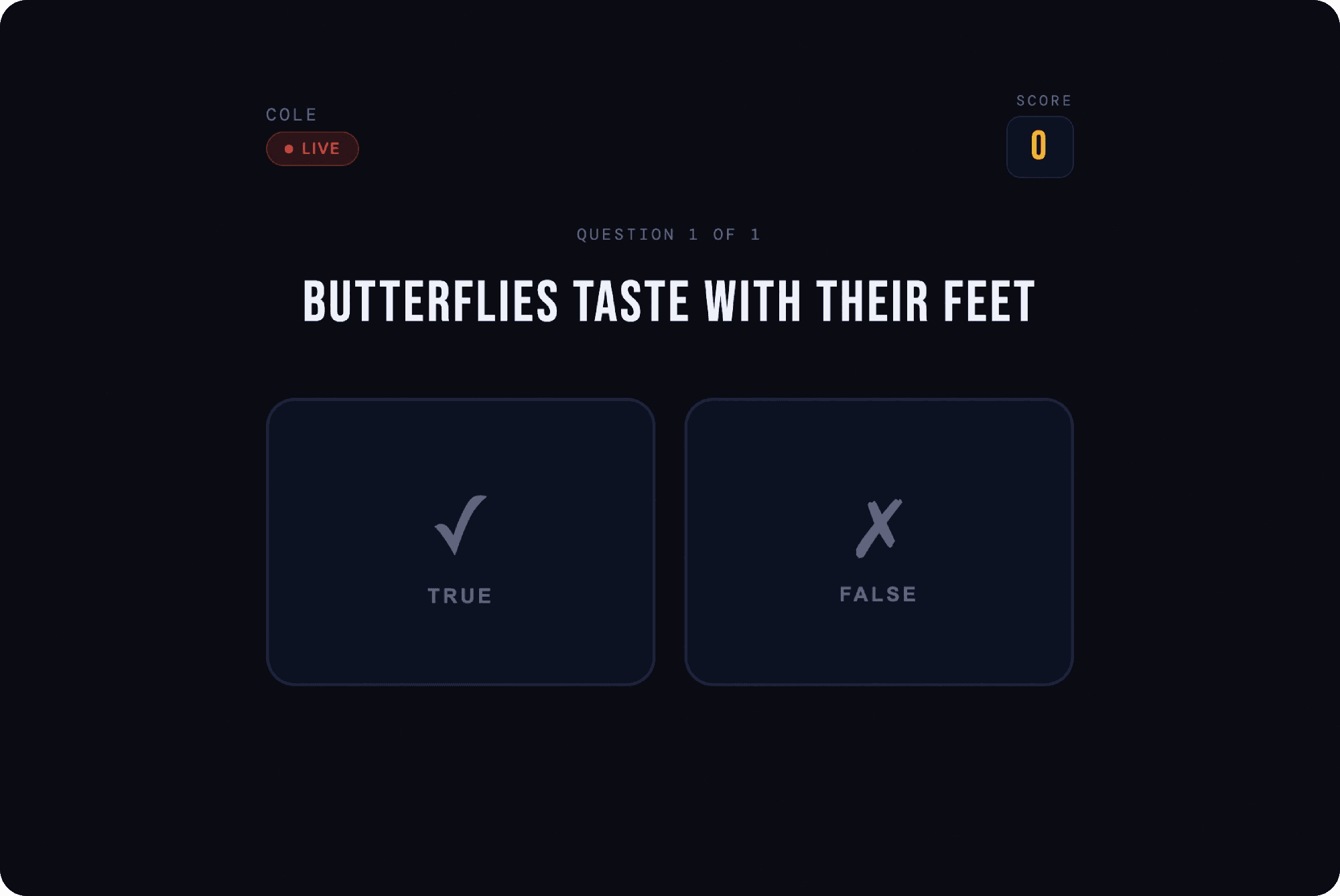
Players answer independently, then the moderator reveals the results when everyone is ready. I took inspiration from games like Kahoot but kept it small enough for the way our team actually plays.
- 2
Built player and moderator flows
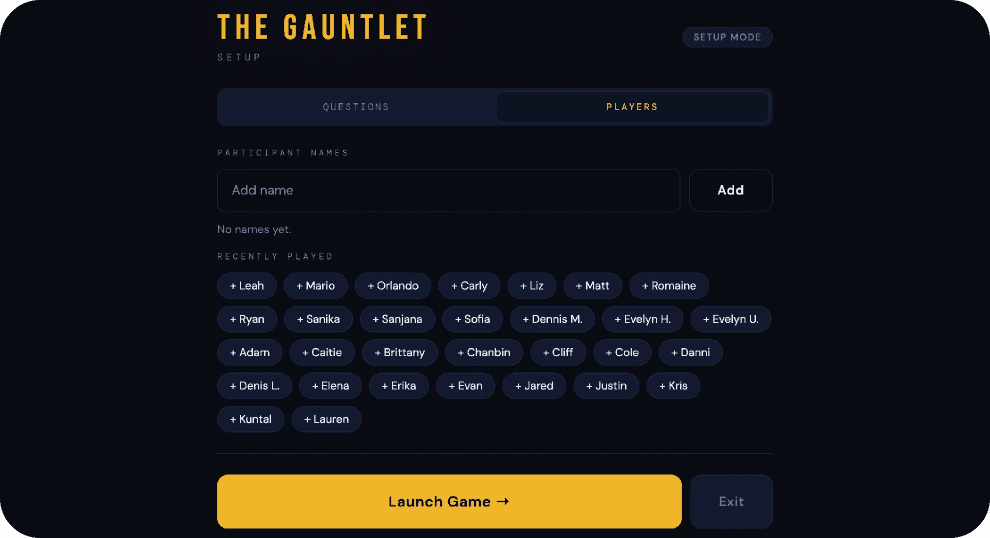
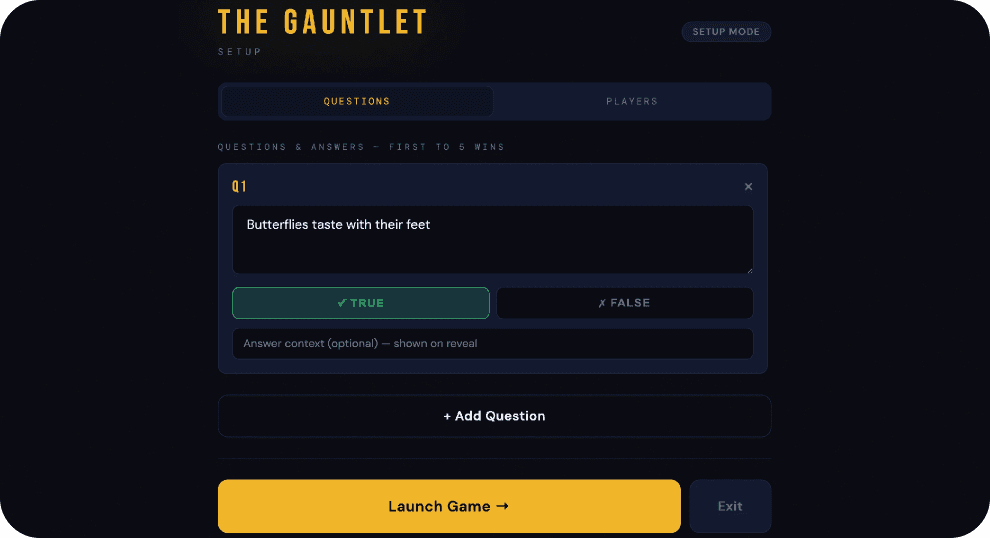
Players join from their phones by selecting their names. The moderator can set questions, see incoming responses, and control when answers are shown. No accounts or complicated setup needed.
- 3
Kept improving it after people started playing
I added response-time tiebreakers, Sudden Death, and a Hall of Fame to keep the rivalry going. Other product designers shared ideas during our weekly sessions, and I worked through those suggestions and bug fixes as we kept using the game.
03The outcome
What changed
- Designed and shipped in one sprint.
- Used in the team's regular Friday trivia sessions.
- Improved through real weekly use and feedback from the designers playing it.
Read the full storyThe complete write-up, about a 1 minute read
The problem
Every Friday, our design team gets together for a little trivia competition. We were running it in FigJam, which was simple enough, except for one obvious flaw: everyone could see everyone else's answers.
That kind of ruins the suspense.
I wanted something that kept the fun and simplicity of the session but made the game feel more like an actual competition. I decided to build it.
The approach
I started with one mechanic: players should submit their answers privately, and the moderator should be able to reveal them when everyone was ready.
I took some inspiration from Kahoot, but I didn't need an entire trivia platform. I needed something that worked for our team on a Friday.
Using Claude Code, I built a simple player experience for phones and a moderator view for managing questions and tracking incoming answers. Players join by selecting their names, so there's no sign-up flow to slow things down.
Then I added response-time tiebreakers, a Sudden Death mode, and a Hall of Fame for the latest and all-time winners. Firebase handles the live data, and Vercel hosts the app. The frontend runs from a single HTML file, without a traditional framework or build setup.
Once we started playing, other product designers on the team had ideas of their own. I could quickly workshop their suggestions, fix bugs, and keep improving the game based on how people actually used it.
The outcome
I went from the idea to a working, deployed game in one sprint, and we use it in our Friday sessions.
It's not a giant enterprise product, and it doesn't need to be. I like it because I had a specific problem, built exactly what was needed, and kept making it better with feedback from the people using it.